
Timing matters
Many couples benefit from a fertility evaluation if pregnancy has not happened after 12 months of regular unprotected intercourse. If the female partner is 35 or older, evaluation is often considered after 6 months because egg number and egg quality change with age.
Earlier review can also help if there are irregular periods, known endometriosis, previous pelvic infection, repeated miscarriage, prior surgery, low sperm count, or a medical treatment history that may affect fertility.
What the first visit checks
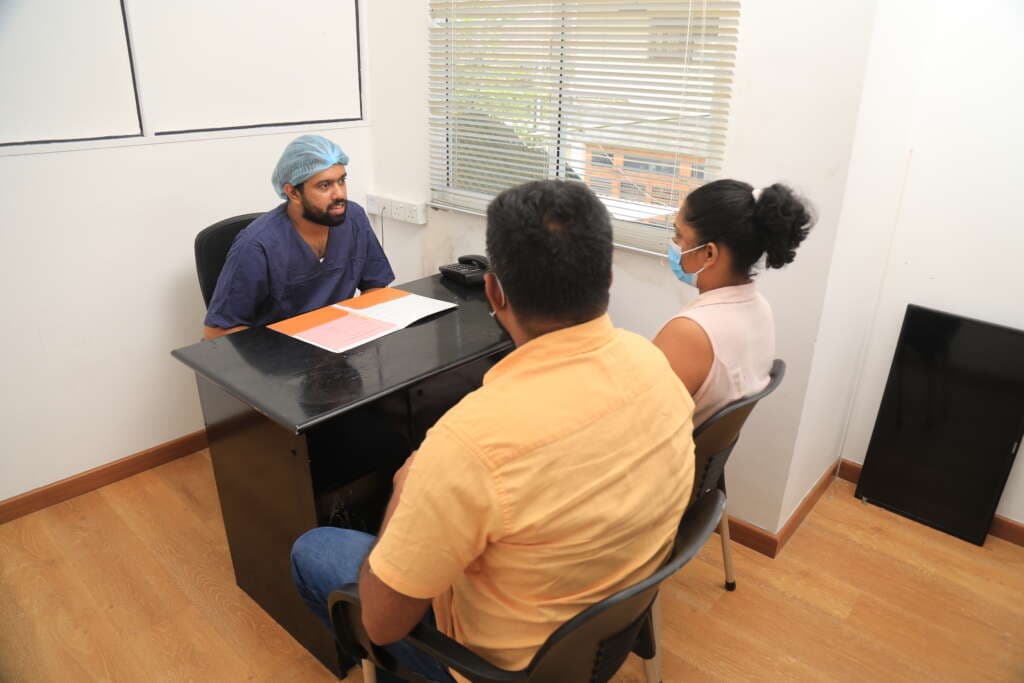
A fertility visit usually begins with medical history, cycle pattern, previous pregnancies, medication use, lifestyle factors, and any past test results. Both partners are part of the evaluation because fertility depends on egg, sperm, uterus, tubes, hormones, and timing.
Common first-line tests include ultrasound, hormone blood tests, semen analysis, and sometimes tube assessment. These results help the doctor decide whether natural-cycle tracking, ovulation induction, IUI, IVF, or another plan is appropriate.
A calm next step
Seeking evaluation does not mean IVF is the only answer. It simply gives clarity. Some couples need reassurance and timing advice, while others benefit from a structured treatment plan.