
ICSI / PICSI Treatment
Fertility Treatments
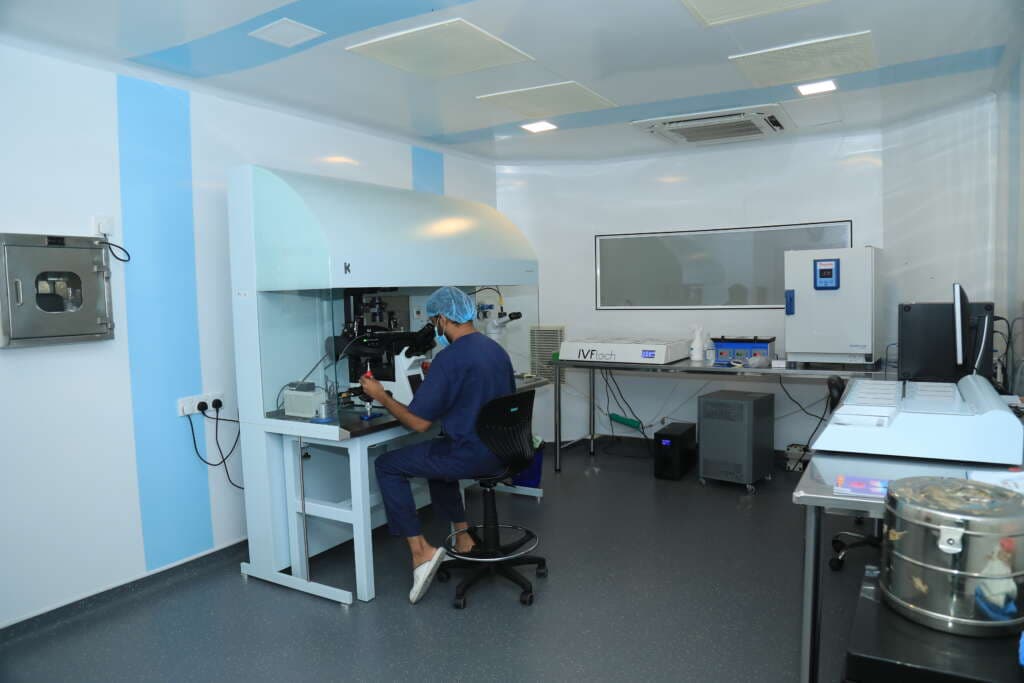
Intracytoplasmic sperm injection (ICSI) is an advanced IVF fertilization technique in which a single sperm is injected directly into an egg in the laboratory.
ICSI may be recommended when sperm count, motility or morphology is low, when sperm has been surgically retrieved, when previous IVF fertilization has been poor, or when only a limited number of eggs are available.
PICSI is a related sperm-selection method that may help embryologists select mature sperm for injection in selected cases. The clinical team will advise whether ICSI or PICSI is appropriate after reviewing semen analysis, previous treatment records and embryo development history.
ICSI and PICSI do not guarantee pregnancy, but they can improve the chance of fertilization in situations where conventional IVF fertilization may be less suitable.
Contact UsHow ICSI differs from conventional IVF
In conventional IVF, eggs and sperm are placed together in a dish and fertilisation is left to happen on its own. That requires enough motile sperm capable of penetrating the egg.
In ICSI, an embryologist selects a single sperm and injects it directly into the egg using a fine glass needle under a high-powered microscope. It bypasses the natural barriers to fertilisation, which is why it is the standard approach where sperm quality is the limiting factor.
Everything else about the cycle — stimulation, monitoring, egg retrieval, embryo culture and transfer — is the same as standard IVF. ICSI changes only the fertilisation step.
When ICSI is recommended
- Low sperm count, poor motility or abnormal morphology
- Sperm obtained surgically by TESA, PESA or TESE
- Poor or failed fertilisation in a previous conventional IVF cycle
- Frozen sperm samples of limited quantity or quality
- Cycles where embryos will undergo PGD/PGT, since ICSI reduces the risk of stray sperm contaminating the genetic sample
- Where only a small number of eggs have been collected and fertilisation cannot be left to chance
What PICSI adds
PICSI is a sperm selection step used before injection. Sperm are exposed to hyaluronan, a substance found naturally around the egg. Mature sperm tend to bind to it, and the embryologist selects from those that do, rather than judging by appearance and movement alone.
It is not needed in every cycle. It is generally considered where there is high sperm DNA fragmentation, recurrent pregnancy loss, or previous cycles with poor embryo development. Your embryologist and specialist will advise whether it is likely to add anything in your case.
What ICSI can and cannot do
ICSI reliably improves the chance of fertilisation where sperm is the obstacle. That is a genuine and well-evidenced benefit.
It does not improve egg quality, guarantee that a fertilised egg becomes a healthy embryo, or guarantee a pregnancy. Where male factor infertility has a genetic cause, that cause can in some circumstances be passed to a son, which is why genetic counselling is offered when it is relevant.
Frequently asked questions
Is ICSI better than normal IVF?
Not universally. Where sperm quality is the limiting factor, ICSI clearly improves fertilisation. Where sperm parameters are normal, it has not been shown to improve outcomes over conventional IVF, so it is used when there is a reason for it rather than by default.
Does ICSI increase the risk of birth defects?
The overall risk remains low. Some studies report a slightly higher rate of certain conditions in ICSI pregnancies, though much of this is thought to relate to the underlying infertility rather than the technique itself. Your specialist will discuss this in the context of your own history.
Do all the eggs survive injection?
No. A small proportion of eggs do not survive the injection, and not every injected egg fertilises. Your embryology team will tell you how many eggs were mature, how many were injected and how many fertilised.
Should we choose PICSI?
Only where there is a specific indication, such as high sperm DNA fragmentation or repeated poor embryo development. It is an additional step with an additional cost, and it is not worth adding without a reason.
Can ICSI be used with surgically retrieved sperm?
Yes, and this is one of its main uses. Sperm retrieved by TESA, PESA or TESE is usually too few in number for conventional fertilisation, so ICSI is the standard method in those cycles.
Get quick guidance about IVF, IUI, ICSI, PGD/PGT, fertility testing and appointment availability in Colombo.